Fiber breakfast ideas are easiest to stick with when they start from food you already like. You don’t need to overhaul your mornings or buy a specialty powder. A familiar base, one fiber-containing addition and a plan for busy days are enough to begin.
The five combinations below are flexible formats, not prescribed menus or calculated nutrient targets. Portions and fiber content vary by brand and serving, so adapt them for allergies, dietary needs, budget, appetite and any advice from your health professional.
Why fiber at breakfast is worth a look
Mayo Clinic explains that fiber is found mainly in plant foods: fruits, vegetables, whole grains, and beans and other legumes. It’s best known for preventing or relieving constipation, and Mayo Clinic notes that fiber-containing foods may also help you stay at a healthy weight and lower the risk of diabetes, heart disease and some types of cancer.
How much is typical? Mayo Clinic cites National Academy of Medicine recommendations of 25 grams a day for women 50 or younger and 21 grams for women over 50. The National Institute of Diabetes and Digestive and Kidney Diseases (NIDDK) gives a range of 22 to 34 grams for adults, depending on age and sex. Breakfast is one convenient place to get some of that, not the only one.
The five combinations at a glance
| Combination | Fiber comes from | Make-ahead option | Good for |
|---|---|---|---|
| Oatmeal with pear | Oats, pear with the skin on, nuts or seeds | Set out oats, bowl and spoon the night before | Cold mornings at home |
| Whole-grain toast with beans or nut butter | Whole-grain bread, beans, nuts | Keep sliced bread in the freezer | Savory eaters |
| Yogurt bowl with berries and oats | Berries, oats or whole-grain cereal | Pack toppings separately | Eating at work |
| Bean and vegetable breakfast | Beans, vegetables, whole-grain tortilla | Set aside ingredients while cooking dinner | People who prefer a hot meal |
| Small breakfast plus a second part | Toast now, fruit later | Decide where the second part is stored | Low appetite first thing |
How to put each one together
1. Oatmeal with pear and a topping you like
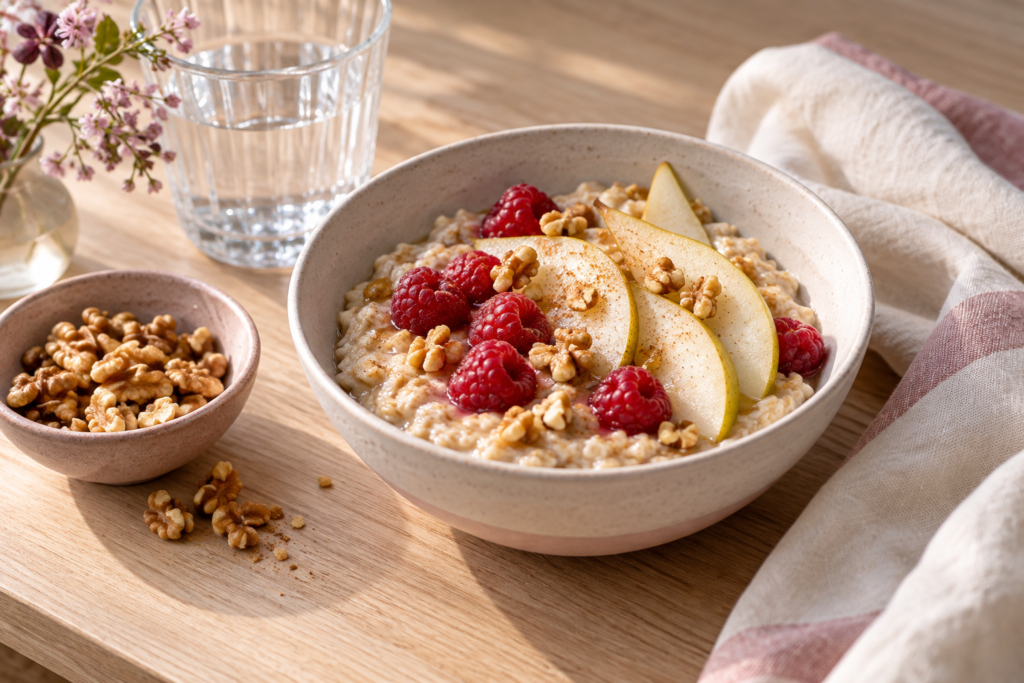
Cook plain oats according to the package, then add chopped pear and, if suitable for you, a few nuts or seeds. NIDDK lists oatmeal, pears and nuts such as almonds, peanuts and pecans among good sources of fiber. Leave the skin on the fruit where you can; Mayo Clinic notes that removing the skin from fruit lowers its fiber. Cinnamon is optional.
2. Whole-grain toast with a savory or nut topping
Try mashed beans with chopped tomato, or a nut or seed spread with sliced fruit if tolerated. When comparing breads, Mayo Clinic suggests checking that whole wheat, whole-wheat flour or another whole grain is the first ingredient, and choosing breads with at least 2 grams of fiber per serving. Color alone won’t tell you whether a loaf is whole grain.
3. A yogurt bowl with berries and oats
Use plain yogurt or a suitable alternative as the base, then add berries and oats or a whole-grain cereal. For cereal, Mayo Clinic suggests looking for one with 5 grams or more of fiber per serving. Frozen berries are convenient. Mayo Clinic says fresh, frozen and canned fruit all work, and recommends canned fruit packed in 100% fruit juice rather than syrup. If you take the bowl to work, keep it cold during your commute.
4. A savory bean and vegetable breakfast
Combine beans with vegetables you enjoy and a base such as toast or a whole-grain tortilla. Add eggs or another protein if you like. Mayo Clinic describes beans, peas and lentils as excellent sources of fiber, and NIDDK lists black beans, kidney beans and chickpeas. Rinsed canned beans save time; Mayo Clinic suggests choosing low-sodium canned vegetables. Breakfast doesn’t have to look like cereal to count.
5. A small breakfast with a planned second part
If a big meal is unappealing first thing, have something small, such as a slice of toast, and plan fruit or another snack for later in the morning. Decide in advance where you’ll keep the second part and when you’ll eat it, so it doesn’t sit forgotten in your bag.
Read the label in three steps
The FDA’s guide to the Nutrition Facts label notes that dietary fiber is one of the nutrients Americans generally don’t get enough of. To compare breakfast products:
- Check the serving size first. The FDA explains that every amount on the label refers to one serving, so if you eat two servings, you double everything.
- Find dietary fiber and its percent Daily Value. The FDA describes %DV as showing how much a nutrient in one serving contributes to your total daily diet.
- Read the ingredient list. Look for a whole grain listed first, as Mayo Clinic suggests, and notice added fiber ingredients such as chicory root. Mayo Clinic says some people get gas after foods with added fiber.
Go slowly: a four-week ramp
Both NIDDK and Mayo Clinic recommend adding fiber gradually. Mayo Clinic says adding too much too quickly can cause gas, bloating and cramping, and suggests increasing slowly over a few weeks so the natural bacteria in your digestive system can adjust. One way to pace it:
| Week | Change |
|---|---|
| 1 | Swap one breakfast a week for a combination above. |
| 2 | Make it two or three mornings if it felt comfortable. |
| 3 | Try a second combination for variety. |
| 4 | Keep whichever version you actually enjoy; drop the rest. |
Drink fluids alongside. NIDDK says water and other liquids help fiber work better. Our drink water routine has low-effort ways to keep a glass nearby.
When to get personal advice
If you have a digestive condition or a prescribed diet, ask your clinician or a dietitian about suitable foods and amounts before changing much. Mayo Clinic notes, for example, that high-fiber foods may make gastroparesis symptoms worse. NIDDK also suggests talking with a health professional, such as a dietitian, to plan meals with the right amount of fiber for you.
Choose one combination this week
Write a three-item shopping note: your base, one fiber addition and anything you need for storage. Check the cupboard first. If the first try doesn’t work, change the flavor or preparation rather than treating it as a failed habit. If a busy week makes meals hard to organize, our self-care plan can help you pick a manageable starting point.
Frequently asked questions
How much fiber should I aim for at breakfast?
There’s no breakfast-specific target in these sources. Mayo Clinic gives daily totals, 25 grams for women 50 or younger and 21 grams for women over 50, so breakfast is just one part of the day.
Is oatmeal a good source of fiber?
Yes. NIDDK lists oatmeal among good whole-grain sources, and Mayo Clinic names oats as a source of soluble fiber.
Why do I feel bloated after adding fiber?
Mayo Clinic says adding too much fiber too quickly can cause gas, bloating and cramping. Increase gradually over a few weeks and drink enough fluids. Talk to a clinician if symptoms persist.
See our editorial policy and medical disclaimer for how we prepare general nutrition information.
Sources
- Mayo Clinic: Dietary fiber: Essential for a healthy diet
- NIDDK, National Institutes of Health: Eating, Diet, and Nutrition for Constipation
- U.S. Food and Drug Administration: How to Understand and Use the Nutrition Facts Label