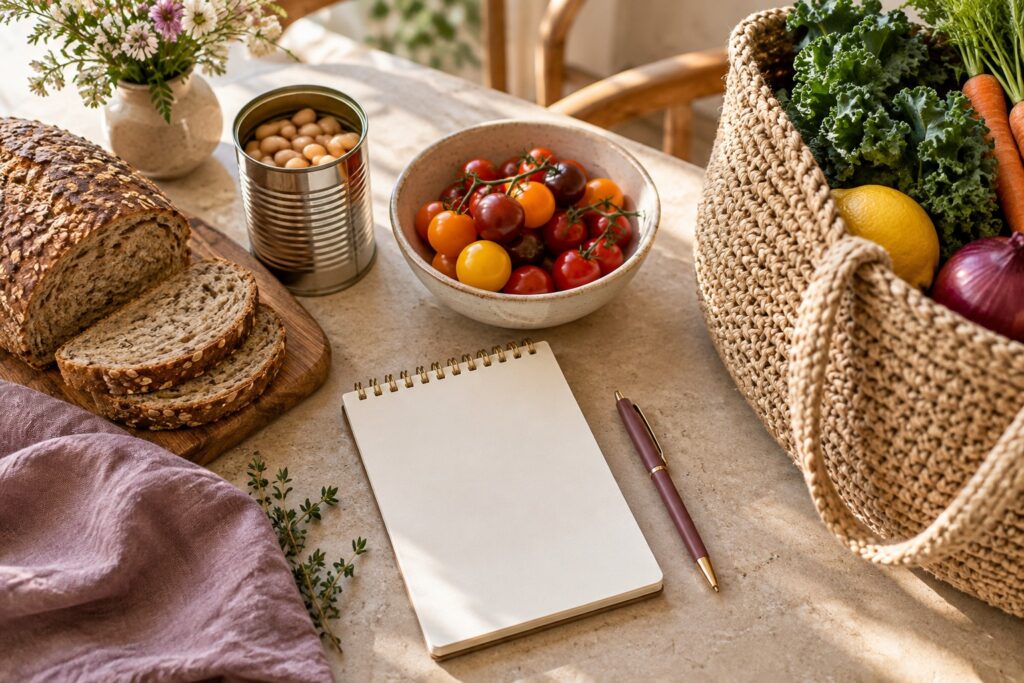
Meal planning for one gets frustrating when recipes serve four and a full week of decisions feels like too much. The three-dinner method keeps things small: plan three dinners, share a few ingredients between them and leave room to change your mind. It’s a way to organize shopping and cooking, not a diet or a rule about how much you should eat.
Cooking for one has a particular problem: leftovers. The U.S. Department of Agriculture (USDA) estimates that food waste is 30 to 40 percent of the U.S. food supply, and notes that consumers contribute when they buy or cook more than they need and throw out the extras. A small plan helps with that and with your budget. Here’s the method in six steps.
Step 1: Count the dinners you’ll actually cook
Look at your calendar and mark the evenings you expect to eat at home. Be honest about the nights with a late shift, a class or simply no energy. A recipe that suits a free Sunday may be unrealistic on a Thursday. If two evenings are already covered by plans or food you have, they don’t need a recipe.
For most people living alone, three planned dinners plus one backup is plenty to start with.
Step 2: Shop your kitchen first
Check the fridge, freezer and cupboard before writing a list. Note what needs using soon. If you’re unsure whether something is still safe, check the FoodSafety.gov cold food storage chart, which gives time limits for specific foods kept in the refrigerator at 40°F or below and the freezer at 0°F or below. Discard anything you can’t identify or aren’t sure is safe.
Step 3: Choose three different dinner formats
Three formats keep shared ingredients from feeling repetitive:
- A bowl: rice or another grain with beans and vegetables.
- An assembly meal: bread or a wrap with a filling you like and a side.
- A simple cooked meal: a small pasta dish, soup or another familiar recipe.
Choose foods that fit your preferences, allergies, traditions, budget and any dietary advice you’ve been given. These are examples, not a complete nutrition plan, and portions depend on your needs. A registered dietitian can help if you need individual advice.
Step 4: Give every fresh ingredient a second job
Before you buy a large pack of anything perishable, name two meals where you’ll use it. If you can’t, buy less, or choose a frozen or canned version. The grid below shows how three dinners can share ingredients without being the same meal.
| Ingredient | Monday: bean and rice bowl | Wednesday: bean wrap | Friday: tomato pasta |
|---|---|---|---|
| Canned beans | Yes | Yes | No |
| Tomatoes | Yes | No | Yes |
| Bag of greens | No | Yes | Yes, as a side |
| Rice | Yes | No | No |
| Wraps | No | Yes | No |
Change the seasoning or sauce if you’re tired of a flavor. Shared ingredients don’t mean three copies of a dish you’ll dislike by day two.
Step 5: Write a list that matches the plan
Split the list into fresh, cupboard and frozen items, and write the quantity you’ll realistically use. Before you check out, ask whether a “value” pack would just create extra food you can’t store or don’t want. Add one backup meal made from long-lasting ingredients you already like. It’s there for when plans change, not to make the list longer.
Step 6: Plan cooking and storage separately
This is where meal planning for one usually goes wrong: a big pot of something on Sunday, then a container at the back of the fridge the following week. The USDA Food Safety and Inspection Service (FSIS) gives clear rules for leftovers:
- Refrigerate leftovers within 2 hours of cooking, or within 1 hour if the temperature is above 90°F.
- Divide large amounts into shallow or smaller containers so they cool quickly. FSIS uses a pot of soup as the example.
- Cover leftovers, wrap them in airtight packaging or seal them in containers.
- Keep leftovers in the refrigerator for 3 to 4 days, or freeze them for 3 to 4 months.
The FoodSafety.gov chart gives more specific times. A few that matter for single-portion cooking:
| Food | Refrigerator | Freezer |
|---|---|---|
| Soups and stews with vegetables or meat | 3 to 4 days | 2 to 3 months |
| Cooked meat or poultry | 3 to 4 days | 2 to 6 months |
| Hard-cooked eggs | 1 week | Do not freeze |
| Egg, chicken, tuna and macaroni salads | 3 to 4 days | Does not freeze well |
The chart notes that freezer times are for quality only, because food kept frozen continuously at 0°F or below stays safe indefinitely. FSIS adds that frozen leftovers can lose moisture and flavor over long storage. A practical habit for one person: freeze half of any soup or stew on the day you make it, in single portions.
Taking a portion to work
Leftovers often become tomorrow’s lunch. The FSIS guide to keeping bag lunches safe says perishable food should be kept cold at all times. It recommends an insulated, soft-sided lunch bag with at least two ice sources, such as two frozen gel packs or a gel pack plus a frozen bottle of water. If there’s a refrigerator at work, put perishable items in it when you arrive. Packing the portion straight from the fridge in the morning is easier than remembering it at the door, so put a note on your keys if you tend to forget.
Review the week in three questions
At the end of the week, ask yourself:
- Which meal would I happily repeat?
- What was left over or thrown out, and why?
- Did the cooking effort match my schedule?
Change one thing next time. A plan that didn’t fit tells you something useful about your week; it isn’t a failure.
If breakfast is another daily decision, our five fiber breakfast combinations use some of the same cupboard staples. To fit meals in with everything else, try our weekly self-care plan. If one evening always feels crowded, make that night’s meal the easiest one.
Frequently asked questions
How long can I keep leftovers when cooking for one?
FSIS says leftovers can be kept in the refrigerator for 3 to 4 days or frozen for 3 to 4 months. Check the FoodSafety.gov chart for specific foods.
Is it safe to refreeze leftovers?
FSIS says thawed leftovers should be used within 3 to 4 days or can be refrozen. Its leftovers page has details on safe thawing and reheating.
How do I avoid wasting food when recipes serve four?
Plan to cook once and eat twice, then freeze the remaining portions promptly. Buy perishables only when you can name two meals that use them.
Sources
- FoodSafety.gov: Cold Food Storage Chart
- USDA Food Safety and Inspection Service: Leftovers and Food Safety
- USDA Food Safety and Inspection Service: Keeping “Bag” Lunches Safe
- U.S. Department of Agriculture: Food Waste FAQs