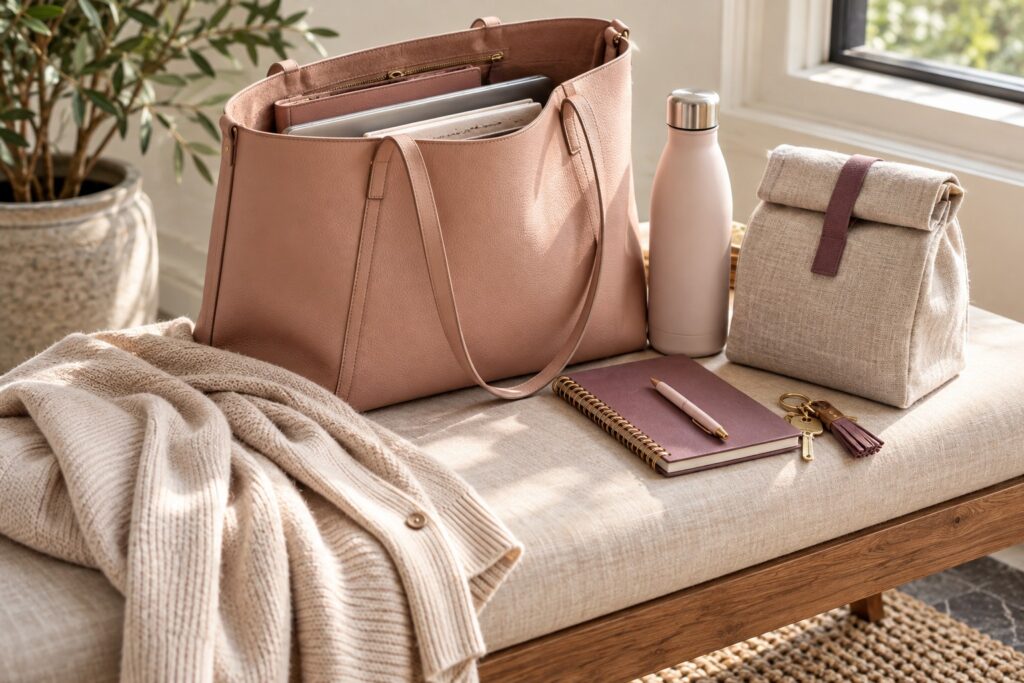
A work bag checklist is most useful when it reflects your actual shift, commute and workplace. A long list of “must-have” products makes a bag heavier without making the day easier. Start with the essentials, then add only what you genuinely use.
The list works for a backpack, tote, briefcase or small pouch. There’s no need to buy matching organizers or replace a bag that already works.
Start with the items you can’t do without
Write down the things that would cause a real problem if you forgot them: keys, a work badge, required equipment, payment or travel cards, and your phone if you use one. Workplace rules differ, so let your employer’s requirements set the baseline.
Keep sensitive items secure. Don’t write passwords, access codes or other security details on a visible packing list. A label such as “work essentials” can remind you to check a pouch without showing what’s in it.
The checklist
Tick through it the night before or at the door. Skip any section that doesn’t apply to your job.
Access and work
- ☐ Keys, badge and any required pass
- ☐ Equipment or paperwork needed for today specifically
- ☐ Charged devices and chargers, if you use them
Food and drink
- ☐ Lunch and snacks, in containers suited to the trip
- ☐ Ice packs for anything perishable
- ☐ A water bottle with a lid that seals
Health and hygiene
- ☐ Any medicines you need during work hours, in a private pocket
- ☐ Period products, if relevant, for the full day
- ☐ Hand sanitizer, if you won’t always have a sink nearby
Comfort
- ☐ A layer, umbrella or spare socks, if you actually use them
- ☐ Something for the commute, such as a book, if you travel by train or bus
Separate “always packed” from “add today”
Splitting the list in two saves you from a full unpack-and-repack every night when only a couple of things change.
| Always packed | Add each day |
|---|---|
| Pen and a small notebook | Lunch and perishable snacks |
| A small pouch of period products | Ice packs from the freezer |
| Hand sanitizer | Today’s work documents |
| Spare hair tie, tissues or other small items you use | A charged device |
| Reusable bag | A refilled water bottle |
Follow workplace policies for devices and confidential documents, and avoid carrying more personal information than you need.
Packing food so it stays safe
A packing list isn’t a food-storage system. The USDA Food Safety and Inspection Service (FSIS) says perishable food must be kept cold at all times and shouldn’t be left at room temperature for more than 2 hours, or 1 hour above 90°F. Its advice for a work lunch:
- Use an insulated, soft-sided lunch bag, with at least two ice sources for perishable food. Two frozen gel packs, or a gel pack plus a frozen bottle of water, both work.
- If there’s a refrigerator at work, put perishable items in it when you arrive.
- For hot food such as soup or stew, use an insulated container. Fill it with boiling water first, empty it, then add the piping hot food and keep it closed until lunch.
- After lunch, throw away leftover food and used packaging rather than bringing it home.
FSIS lists foods that don’t need refrigeration, including whole fruits and vegetables, hard cheese, canned meat and fish, bread, crackers and peanut butter. They’re handy for days when you can’t keep a lunch cold. For simple ideas, see our fiber breakfast ideas.
Keep drinks closed and away from electronics and paperwork. The CDC suggests carrying a reusable water bottle as an easy way to drink more water, and freezing water in a freezer-safe bottle so it stays cold all day. That bottle can double as one of your lunch ice sources. Our drink water routine covers reminders without prescribing a set amount.
A small health kit
Hand sanitizer. The CDC says washing with soap and water is the best way to get rid of germs in most situations. When soap and water aren’t available, use a sanitizer with at least 60% alcohol, which you can check on the label. The CDC notes that sanitizer may not work as well on visibly dirty or greasy hands, so wash with soap and water then.
Period products. If you use tampons, pack enough for the whole workday. The U.S. Food and Drug Administration (FDA) advises changing each tampon every 4 to 8 hours, never wearing one for more than 8 hours, and using the lowest absorbency you need. A long shift plus a commute can easily pass 8 hours. The FDA also lists signs of toxic shock syndrome, including sudden high fever, vomiting, diarrhea, fainting or dizziness, and a sunburn-like rash. If you have these during or soon after your period, it says to stop using tampons and seek medical attention immediately.
Create a landing spot at home
Choose one place for the bag and a small container for items that tend to wander. It doesn’t need to look like a styled entryway. For anything that has to stay elsewhere overnight, like lunch in the fridge, leave a reminder where you’ll naturally see it, such as a note on your keys.
A five-minute end-of-day reset
- Take out the lunch container and anything that needs washing.
- Throw away rubbish and used packaging.
- Put the ice packs and water bottle back in the freezer.
- Return your badge and keys to their usual pocket.
- Restock anything from the “always packed” column you used up.
Once a week, take out anything that’s been riding along unused.
Review what you actually carried
After a few workdays, ask what you used, what you wished you’d had and what never left the bag. Adjust the list rather than adding every possible “just in case.” If carrying the bag is uncomfortable, lighten the load or change how you carry it. Pair this checklist with our weekly self-care plan and movement breaks at work guide when choosing practical changes for your day.
Frequently asked questions
How do I keep my lunch cold without a fridge at work?
FSIS recommends an insulated, soft-sided bag with at least two ice sources, such as two frozen gel packs or one gel pack and a frozen bottle of water.
What kind of hand sanitizer should I carry?
The CDC recommends a hand sanitizer containing at least 60% alcohol, used when soap and water aren’t available.
How many tampons should I pack for a workday?
Enough to change every 4 to 8 hours across your whole day, including the commute, since the FDA says never to wear one tampon for more than 8 hours.
Sources
- USDA Food Safety and Inspection Service: Keeping “Bag” Lunches Safe
- CDC: Hand Sanitizer Guidelines and Recommendations
- CDC: About Water and Healthier Drinks
- U.S. Food and Drug Administration: The Facts on Tampons and Tampon Safety