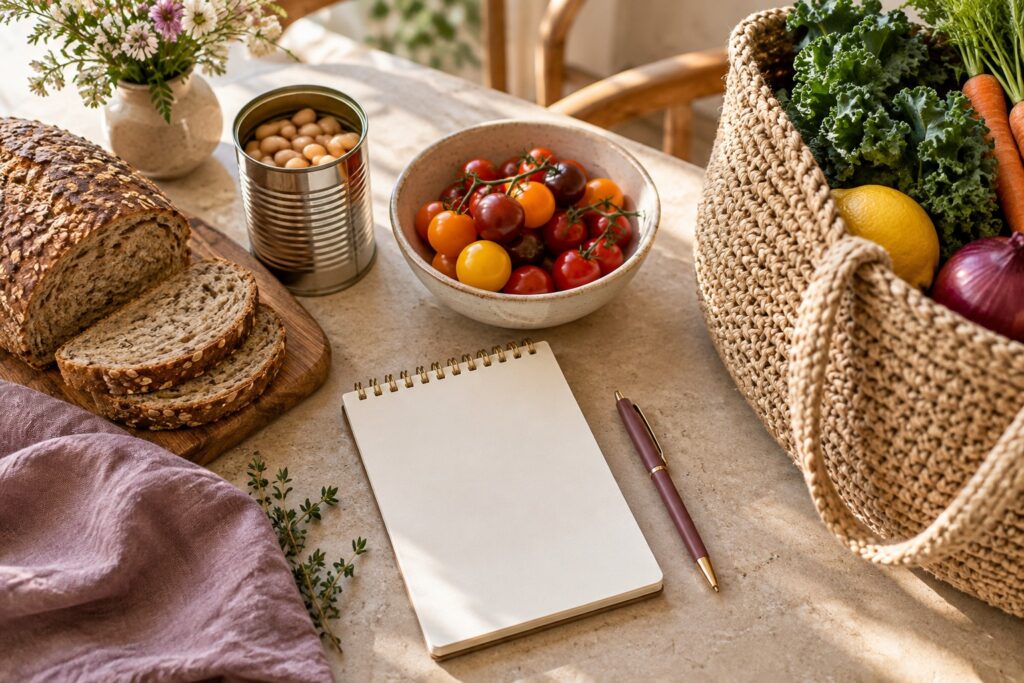
Meal planning for one can become frustrating when recipes feed four people and a full week of decisions feels like too much. A smaller plan starts with three dinners, a few overlapping ingredients, and space for changing your mind. It is a way to organize shopping, not a diet or a rule about how much you should eat.
Begin with the meals you actually need to make. If two evenings are already covered by work, family plans, or food you have available, those evenings do not need another recipe.
Count meals before choosing recipes
Look at your calendar and mark the dinners you expect to eat at home. Include evenings when you will have limited time or energy. A cooking project that suits a free Sunday may be unrealistic after a late shift.
Next, check what is already in your fridge, freezer, and cupboard. Write down ingredients that can be used safely, rather than buying a second version of everything. Check package instructions and discard food you cannot identify or are unsure is safe to eat.
Choose three different dinner formats
For this method, choose one bowl-style meal, one quick assembly meal, and one simple cooked meal. Different formats let shared ingredients feel less repetitive. Use foods that fit your preferences, allergies, cultural traditions, budget, and any dietary advice you have been given.
- Bowl: rice or another grain with beans and vegetables.
- Assembly: bread or a wrap with a filling you enjoy and a side.
- Cooked meal: a small pasta dish, soup, or other familiar recipe.
These are examples, not a complete nutrition plan. Portions depend on your needs. If you need individualized nutrition advice, a registered dietitian or other qualified professional can help.
Give each fresh ingredient a second use
Before buying a large pack, name two meals where you would actually use it. Tomatoes might work in a bowl and a sandwich. A bag of greens could accompany a cooked dinner and fill a wrap. If you cannot name a second use, a smaller amount or a frozen alternative may fit your plan better.
Shared ingredients do not have to mean identical meals. Change the format or seasoning rather than preparing three copies of something you already know you will dislike by day two.
A sample three-dinner plan
Illustrative example: Monday is a bean-and-rice bowl with tomatoes. Wednesday is a bean wrap with greens. Friday is pasta with tomatoes and a side of greens. The shopping list starts with these ingredients, then adds the cupboard items the person does not already have.
This example does not tell you to keep cooked food all week. Plan cooking and storage separately, follow safe storage guidance, and use freezing where appropriate. Check the FoodSafety.gov cold-food storage chart for food-specific guidance rather than relying on a blanket rule for every ingredient.
Write a shopping list that matches the plan
Divide the list into fresh items, cupboard items, and frozen items. Add quantities you will realistically use. Before checkout, check whether a larger “value” package would create extra food you do not want or cannot store.
Keep one flexible backup meal using ingredients you already like. Its purpose is to help when plans change, not to make the shopping list longer. If breakfast is another daily decision, our five breakfast combinations offer formats you can adapt.
Review the plan without grading yourself
After a week, note which meal you wanted to repeat, what remained unused, and whether the cooking effort matched your schedule. Change one thing in the next plan. Planning every meal perfectly is less useful than identifying why a reasonable plan did not fit.
Keep meal decisions alongside the rest of your week with our weekly planning worksheet. If a particular evening always feels crowded, make its meal easier before adding another preparation task.